Skip to content

Antique Boxes

  • Home
  • Information
    • HardstoneInformation on hardstone boxes including general information on the different types of hardstones
    • Jewelry Boxes Information
  • Makers Marks
    • Ceramic Makers Marks
    • Glass Makers Marks
    • Silver Makers Marks
      • Danish Silver MakersUnder the Danish Hallmarking Act of 1893, the content standard for all silver was set at 826 parts out of 1,000, which is slightly lower than the standard for sterling which is 925. The remainder is usually copper with very small amounts of iron, lead and traces of other metals. The Danish mark, 826S was used until about 1915 when silversmiths raised their silver content to 830 and eventually to 925. Reference: jensensilver.com
      • UK Silver MakersOne of the most highly structured hallmarking systems in the world is that of the United Kingdom, (Scotland, England, Wales and Northern Ireland), and Ireland. These five nations have, historically, provided a wealth of information about a piece through their series of applied punches. It should be noted that since 2015 visually identical UK Hallmarks are being struck in India and Italy by sub-offices of Birmingham & Sheffield Assay Offices respectively: English silver makers have used their own marks for centuries. These can consist of their initials or unique mark. They are shown with the Lion Passant for Sterling, Date letter and City Mark also known as the Assay Mark.  The image above shows the hallmark for an English silver maker alongsides the Lion Passant for Sterling, Leopards Head for London and the date letter “u” for 1955.    
        • Birmingham Silver Makers
        • London Silver Makers
      • Japanese Silver Makers
  • Price Guide
    • CeramicsThe earliest ceramics made by humans were pottery objects (i.e. pots or vessels) or figurines made from clay, either by itself or mixed with other materials like silica, hardened, sintered, in fire. Later they were glazed and fired to create smooth, colored surfaces, decreasing porosity through the use of glassy, amorphous ceramic coatings on top of the crystalline ceramic substrates. Ceramics now include domestic, industrial and building products, as well as a wide range of ceramic art. In the 20th century, new ceramic materials were developed for use in advanced ceramic engineering, such as in semiconductors. Reference: Carter, C. B.; Norton, M. G. (2007). Ceramic materials: Science and engineering. Springer. pp. 20 & 21 and Wikipedia
    • Asian Boxes
      • BambooPrice guide to antique bamboo boxes. Bamboo has hundred of species and grows in large swathes across parts of East, South, and Southeast Asia. Along with wood, stone, sand, clay and animal parts, bamboo was one of the first materials worked by early humans. The development of civilization was closely tied to the development of increasingly greater degrees of skill in working these materials. Just like woodworking, it came to be used for bamboo construction, bamboo textiles, bamboo and wooden slips, bamboo musical instruments, bamboo weaving, and many other areas. Reference: Wikipedia
      • Chinese BoxesPrice guide to antique Chinese boxes.
        • Qianlong PeriodThe Qianlong Emperor was the longest living emperor of China. He lived for 87 years and reigned for 61 years officially between 11 October 1735 to 8 February 1796.
      • Japanese BoxesPrice guide to antique Japanese boxes including wooden, lacquerware and ceramic boxes.
    • Glass
    • Hardstone Boxes
    • Military Boxes
    • Music Boxes
    • Silver
      • Russian Silver
    • Storage Boxes
      • Tea Caddies
      • Chests
    • Tobacciana
      • Cigar Cases
      • Snuff Boxes
    • Trinket / Jewellery / Pill Boxes
      • Jewelry Boxes
      • Pill Boxes
      • Vanity Boxes
    • Wooden Boxes
      • Lacquerware
      • Rosewood Boxes
      • Satinwood
      • Walnut Boxes
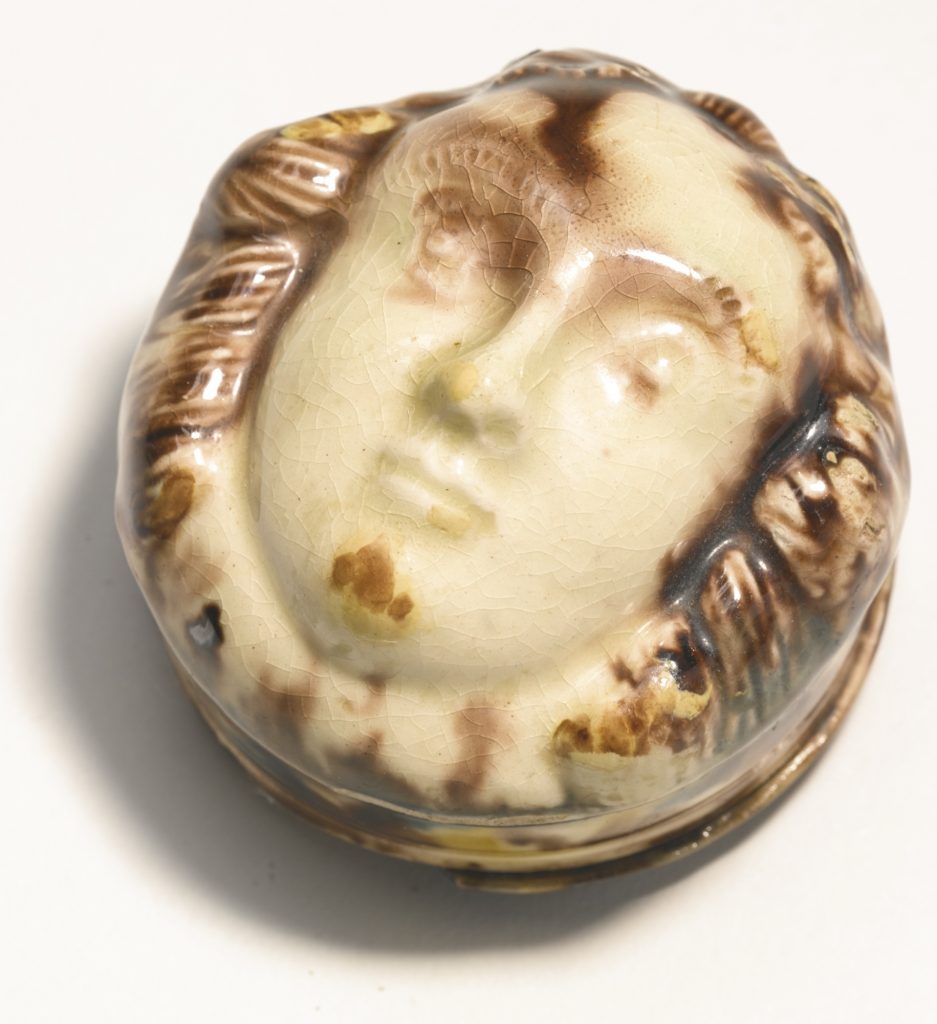
RARE LEEDS LEAD-GLAZED CREAM-COLORED EARTHENWARE CIRCULAR BOX AND COVER
Posted inCeramics Price Guide

Earthenware Boxes

Price guide to antique earthenware boxes. Earthenware is pottery that has not been fired to the point of vitrification and is thus slightly porous and coarser than stoneware and porcelain. The…
Read More
Posted inCeramics, Price Guide
A CARVED PALE CELADON JADE HEXAGONAL JAR AND COVER
Posted inAsian Boxes Chinese Boxes Hardstone Boxes Price Guide

Chinese Jade Boxes

Price guide to antique Chinese jade boxes. Price guide to antique Chinese jade boxes. Jade is the primary hardstone of Chinese sculpture. For most of China's history, jade has come in…
Read More
Posted inAsian Boxes, Chinese Boxes, Hardstone Boxes, Price Guide
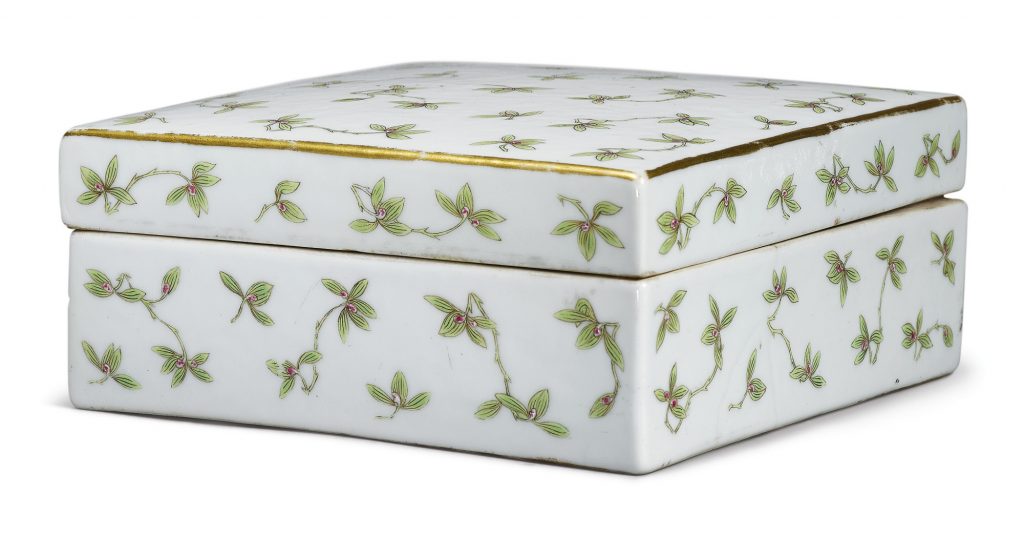
A FAMILLE-ROSE 'ORCHID' BOX AND COVER
Posted inAsian Boxes Ceramics Chinese Boxes Price Guide

Famille-Rose Porcelain

Price guide to antique Famille Rose porcelain boxes. Famille-Rose, sometimes known as Rose Famille, was introduced during the reign of the Kangxi Emperor (1654–1722), possibly around 1720. It used mainly…
Read More
Posted inAsian Boxes, Ceramics, Chinese Boxes, Price Guide
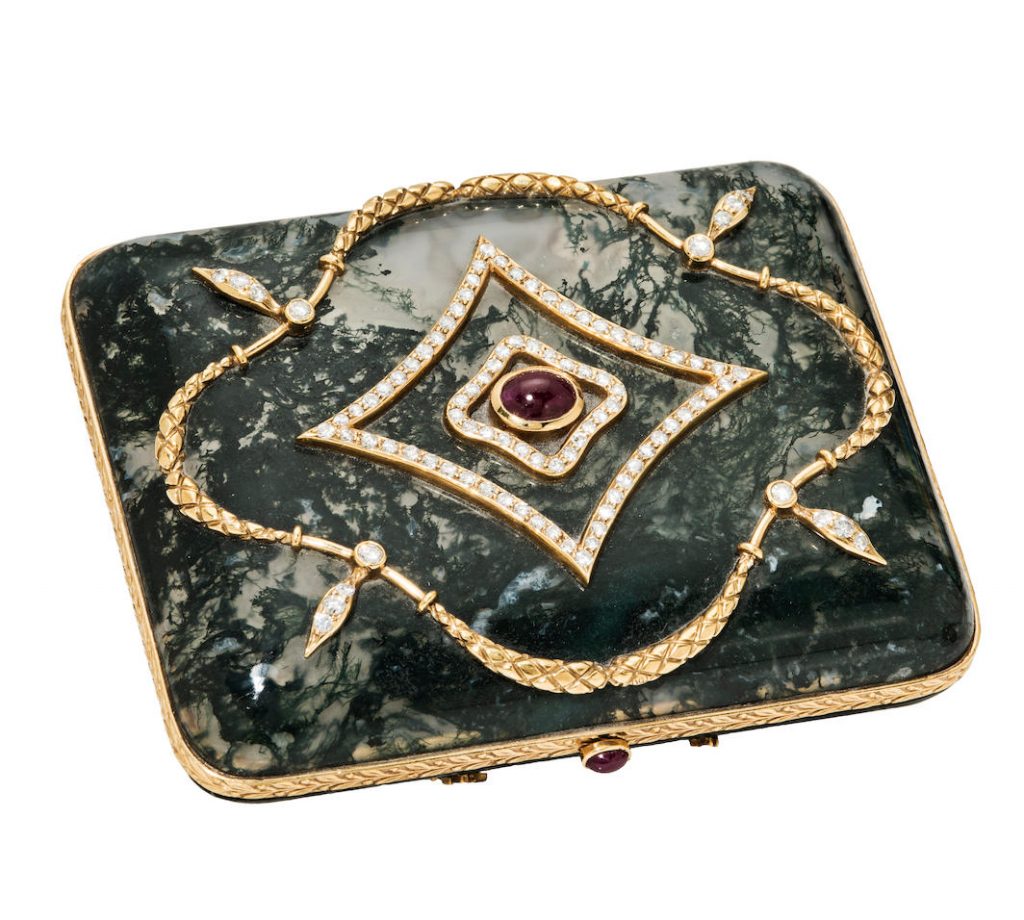
A moss agate, diamond and ruby box
Posted inHardstone Information

Moss Agate

Despite it's name, Moss Agate is actually a form of Chalcedony and not a true agate.  It is recognizable from it's patterns which resemble moss and landscapes. Moss agate is a translucent…
Read More
Posted inHardstone, Information
Circular, gold-mounted hardstone bonbonniere
Posted inHardstone Information

Lapis Lazuli

Lapis Lazuli has been highly regarded since neolithic times. It was used to make beads and seals. The ancient Egyptians often used this stone to make amulets and scarabs as…
Read More
Posted inHardstone, Information
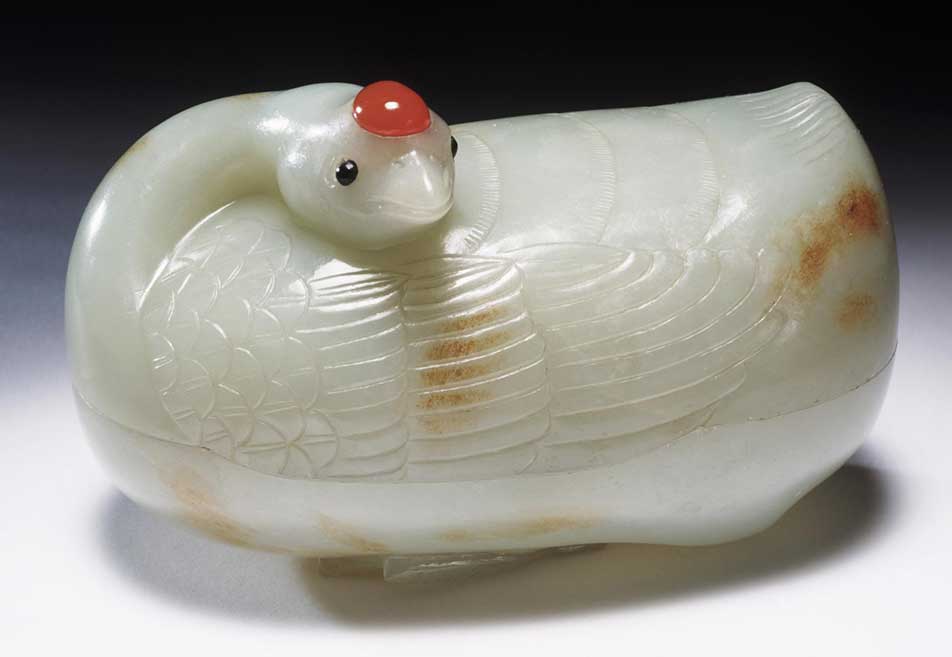
Box in the shape of a goose with its head resting on its body
Posted inHardstone Information

Jade

Information and images of jade boxes. Jade is an ornamental mineral, mostly known for its green varieties, which feature prominently in ancient Asian art.
Read More
Posted inHardstone, Information
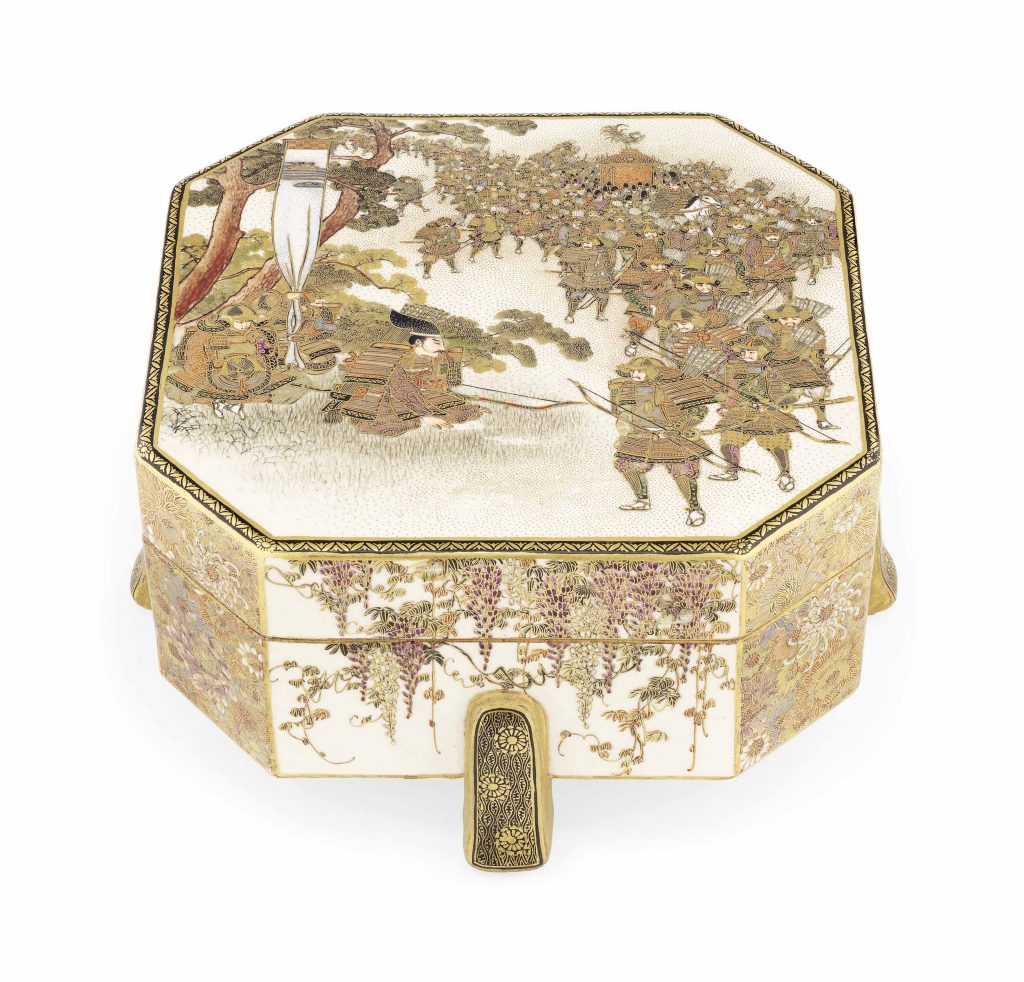
A Satsuma Box and Cover Signed Ogurisu
Posted inAsian Boxes Ceramics Japanese Boxes Price Guide

Satsuma Boxes

A price guide to Japanese Satsuma Ware boxes. Satsuma ware  is a type of Japanese pottery originally from Satsuma Province, southern Kyūshū. Below are some examples of Satsuma ware and the…
Read More
Posted inAsian Boxes, Ceramics, Japanese Boxes, Price Guide
A lacquered-wood stationery box (ryoshibako)
Posted inAsian Boxes Japanese Boxes Price Guide Wooden Boxes

Japanese Wooden Boxes

   
Read More
Posted inAsian Boxes, Japanese Boxes, Price Guide, Wooden Boxes
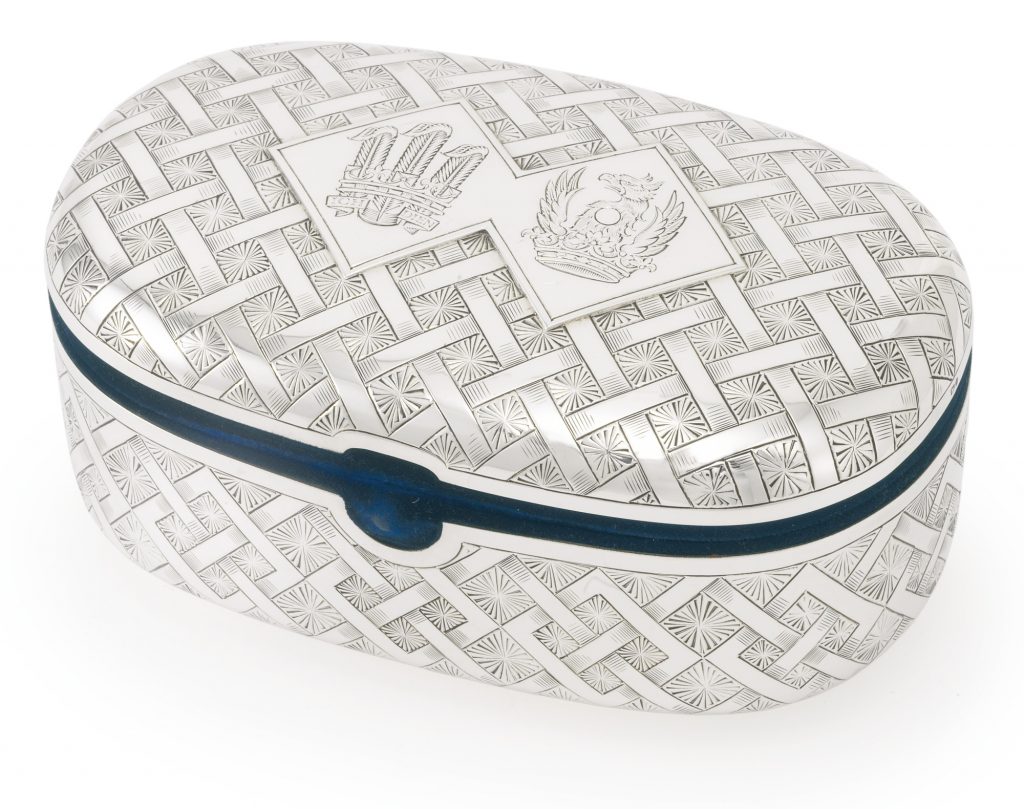
Prince Charles and Lady Diana Spencer: an Elizabeth II commemorative silver jewel box
Posted inEnglish Silver Makers London Silver Makers Silver Makers Marks

Mappin & Webb

Mappin & Webb traces its origins to 1775, when Jonathan Mappin opened a silver workshop in Sheffield, then as now a major centre of the English silver trade. The business…
Read More
Posted inEnglish Silver Makers, London Silver Makers, Silver Makers Marks
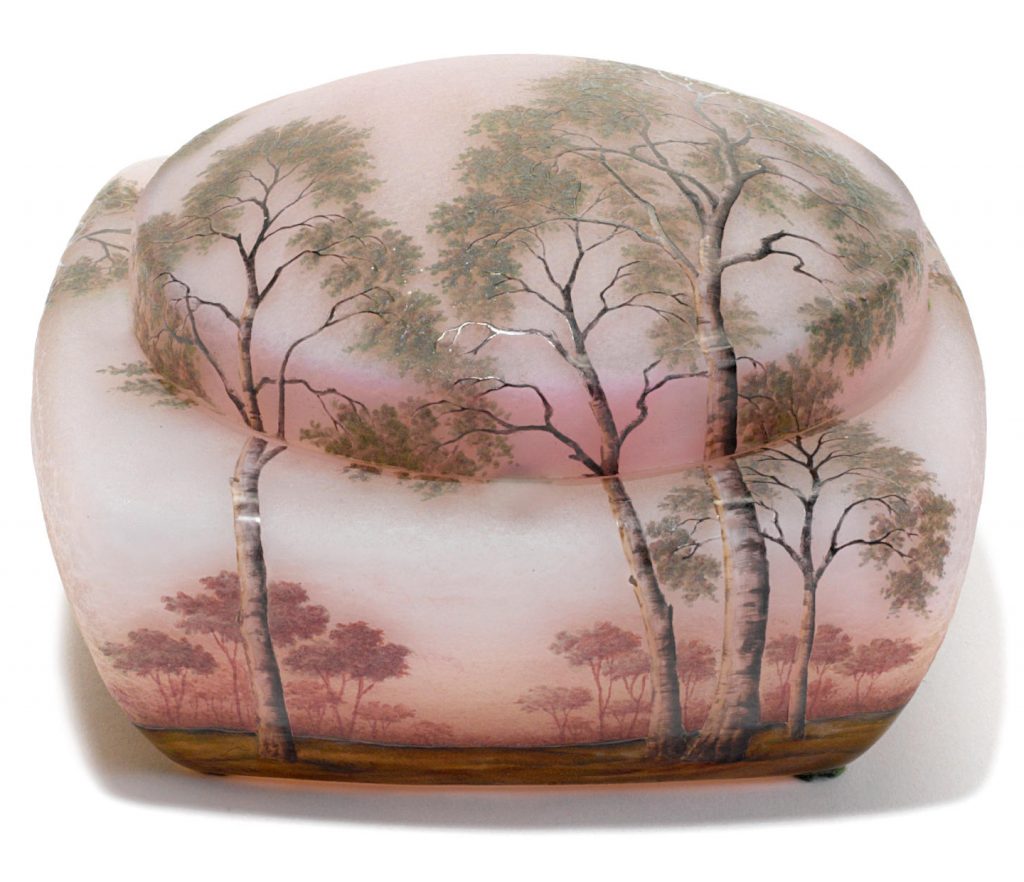
A Daum Nancy enameled cameo glass Landscape box
Posted inGlass Makers Marks Makers Marks

Daum Nancy Glass

Daum is a crystal studio based in Nancy, France, founded in 1878 by Jean Daum (1825–1885). His sons, Auguste Daum (1853–1909) and Antonin Daum (1864–1931), oversaw its growth during the…
Read More
Posted inGlass Makers Marks, Makers Marks

Posts navigation

Previous page 1 … 4 5 6 7 8 … 10 Next page

“When you click on links to various merchants on this site and make a purchase, this can result in this site earning a commission.  Affiliate programs and affiliations include, but are not limited to, the eBay Partner Network.”

Copyright 2024 — Antique Boxes. All rights reserved.
Scroll to Top